The neural watch that measures and trains your nervous system
Not your heart. Not your motion. The actual electrical signals your brain sends your muscles, measured in real time, turned into performance analytics, and improved daily with 5-minute exercises that help you stay at peak performance, even 10 years from now.
Why Pison beats any wearable you’ve tried
Helped an NHL superstar become 24.61 ms faster
The fastest player in hockey used Pison for 8 months and logged 11 hours of reaction-time attunement. Result: 24.61 ms faster, +22.7 AGILITY points, top 0.1% of all users.
The tech inside Xiaomi Watch 5
You’ve already worn Pison without knowing it. Its neural sensing technology was directly purchased and adapted by major wearable companies.
Clinically proven to improve reaction time
Clinical trial, peer-reviewed lab studies, and pilots on intoxication, fatigue, and ALS detection. Not wellness theater: a neurology-backed device built to keep your cognition sharp for life.
Six years inside U.S. Special Ops
Built and validated with the U.S. military for vigilance and cognitive READINESS under operational stress. SOCOM Phase III SBIR, 2023.
Timex is building “powered by Pison” wearables
Pison and STMicroelectronics named Timex as a neural sensor partner in January 2025. Timex-branded devices powered by Pison began rolling out to commercial marketplaces that spring, redefining what’s possible in neurocognitive wearables. Read the announcement →
Empowering Special Operations veterans after service
Pison partners with The Honor Foundation to support U.S. Special Operations Forces veterans as they transition from military to civilian careers. Technology developed with DoD funding now helps the warriors who helped build it. Read the partnership →
From lab to life at MWC 2026
At MWC 2026, CEO David Cipoletta announced Pison’s neural sensing in the Xiaomi Watch 5 worldwide launch, a lab-to-life milestone years in the making. “We aren’t just launching a feature; we are building an entirely new category.” Read David’s post →
What Makes Pison Unique
Every fitness tracker on Earth (Oura, Garmin, Apple Watch, Whoop, Fitbit) runs on two sensors: an optical pulse reader and a motion chip. Stress, recovery, Body Battery, readiness: all of it is software guessing from heart rate and movement.
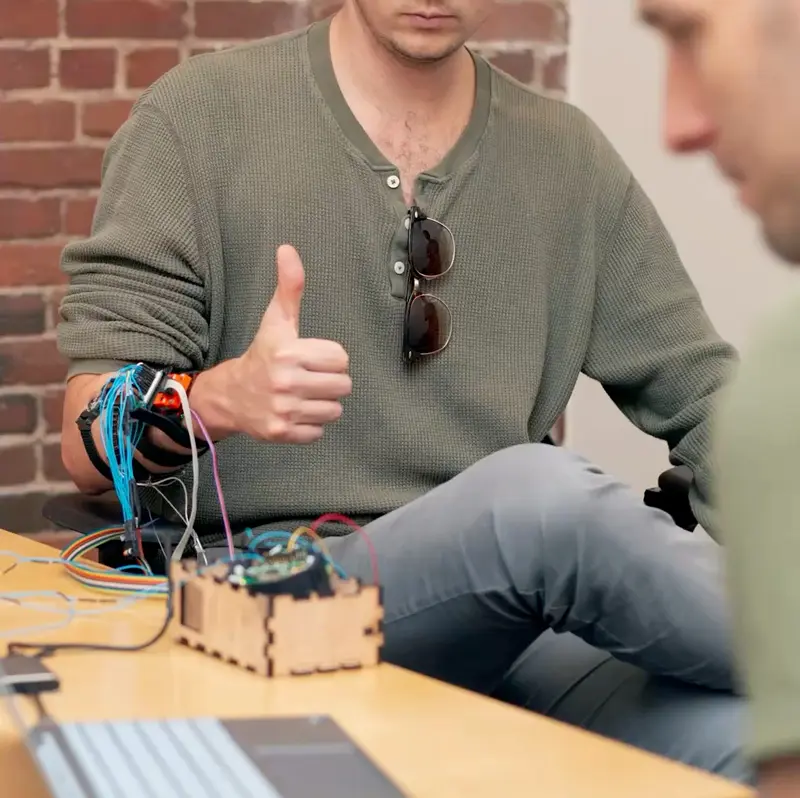
Pison skips the guesswork. The neural watch uses electroneurography (ENG) to read the actual electrical signals your brain fires down your nerves to your muscles, the same signal a neurologist measures with needle EMG, but passively, from your wrist.
In plain English: it catches the electric pulse your brain sends your hand, before your hand even moves.


That means it can tell you, in milliseconds, how fast you’re thinking, how cognitively fatigued you are, and whether you’re actually ready for the moment that matters. And it comes with built-in exercises that train those numbers up: the same type of brain speed training shown in a 10-year landmark study (Edwards et al., Alzheimer’s & Dementia) to cut dementia risk by up to 48%, and which ranks as the #2 predictor of all-cause mortality, ahead of physical activity and blood pressure.
What began as one person’s idea has grown into a technology backed by MIT, the NSF, the ALS Association, Samsung, and U.S. Special Operations Command. Six years of military R&D. Clinical validation in ALS. Adopted by MLB prospects and the NHL’s fastest players. Its neural sensor is licensed into Xiaomi Watch 5. And it does everything your other watch does on top.
Meta’s CTRL-labs wristband bets on EMG for gesture input. Muse and Neurable use EEG headsets for brain-state monitoring. Mudra reads EMG for touchless control. Pison is the only neural watch using clinical-grade ENG from the wrist to continuously measure cognitive performance (reaction time, fatigue, READINESS) and pair it with on-device training to improve those numbers over time.
The Science Behind Pison
Tested impact, backed by peer-reviewed research
Landmark studies, NIH-grade datasets, and university clinics, establishing both why this matters and that the device itself works.
48% lower dementia risk after 16 hours of reaction-time training
Proof: 10-year ACTIVE study (Edwards et al., 2017, Alzheimer’s & Dementia): speed-of-processing training (the category of exercises Pison delivers) produced a 48% reduction in dementia incidence at higher doses. Read the study →
Reaction time = #2 predictor of all-cause mortality
Proof: Peer-reviewed population study in Intelligence: reaction time outranked physical activity, blood pressure, and resting heart rate. Only smoking predicted mortality more strongly. Pison’s daily test directly measures and trains that exact signal.
Detects ALS before clinical symptoms
Proof: NIH/NSF-funded clinical trial at Temple University’s MDA/ALS Center of Hope: Pison distinguishes ALS patients from healthy controls and tracks disease progression non-invasively. AP press release →
Matches gold-standard biometrics in the lab
Proof: Published in IISE Annual Conference Proceedings 2025 (Montana State University × Pison): ENG sensor benchmarked against HR, EDA/GSR, eye tracking, and facial expression analysis under cognitive stress. Reaction time changed measurably (−11.9 ms, p=0.068) with the validated stack.
Sleep model built on the gold standard
Proof: Pison’s sleep model was trained on the NIH-funded Sleep Heart Health Study (the gold-standard polysomnography dataset) and the Muse EEG headset as the silver standard. Real clinical lineage, not a curve fit.
Detects intoxication and fatigue without a breathalyzer
Proof: 2025 bioRxiv pilot: Pison’s premotor-time signal tracks blood alcohol content linearly and flags users over the 0.08% legal limit. Same logic applies to sleep deprivation and concussion.
What It Actually Does
Same wrist. Everything a fitness tracker does, plus a brain.
- READINESS test (daily cognitive baseline)
- AGILITY test (speed of decision-making)
- FOCUS test (sustained attention)
- Real-time neural data feed
- Personalized progress trends
- Reaction time (ms-level precision)
- Cognitive READINESS score
- Mental fatigue detection
- Stress & arousal load
- Fit-for-duty / impairment alerts
- Heart rate & HRV
- Sleep tracking + Sleep Need
- Recovery score
- Daily activity & workouts
- Gesture control (touchless input)
Recommended Use
A day with Pison, in five steps
Wear it
Passive nerve, heart, sleep, and motion tracking, day and night.
60-sec morning test
A light flashes, you flex your wrist. Get your READINESS Score.
5 min of brain training
Quick exercises that measure when your brain actually decided.
Check your trends
Coffee vs. ice bath. 6 hours of sleep vs. 8. See what works for you.
Stay at your peak, 10 years from now
Regular use keeps your cognition at peak, not just today, but a decade out.
The Story Behind Pison
Dexter Ang & David Cipoletta, co-founders
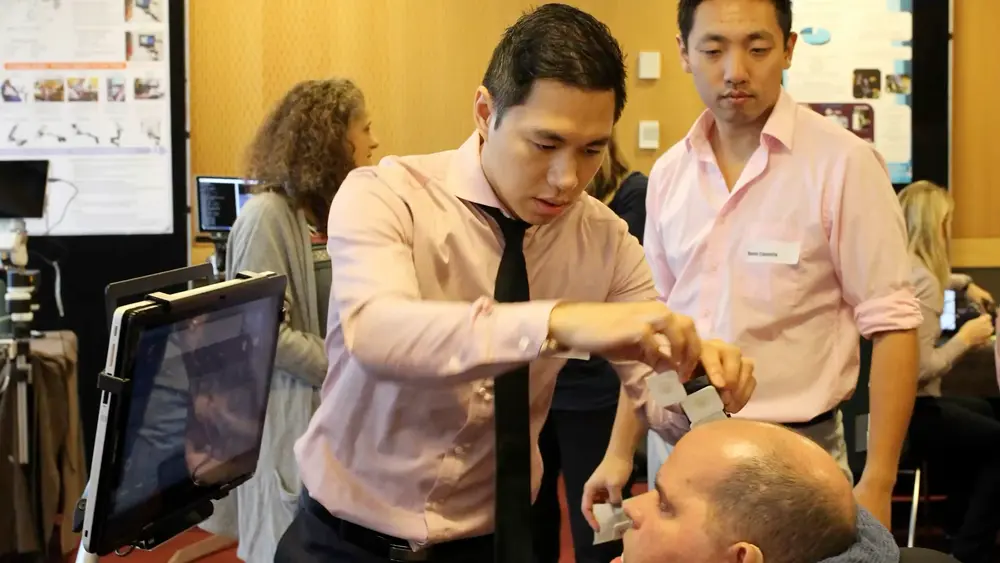
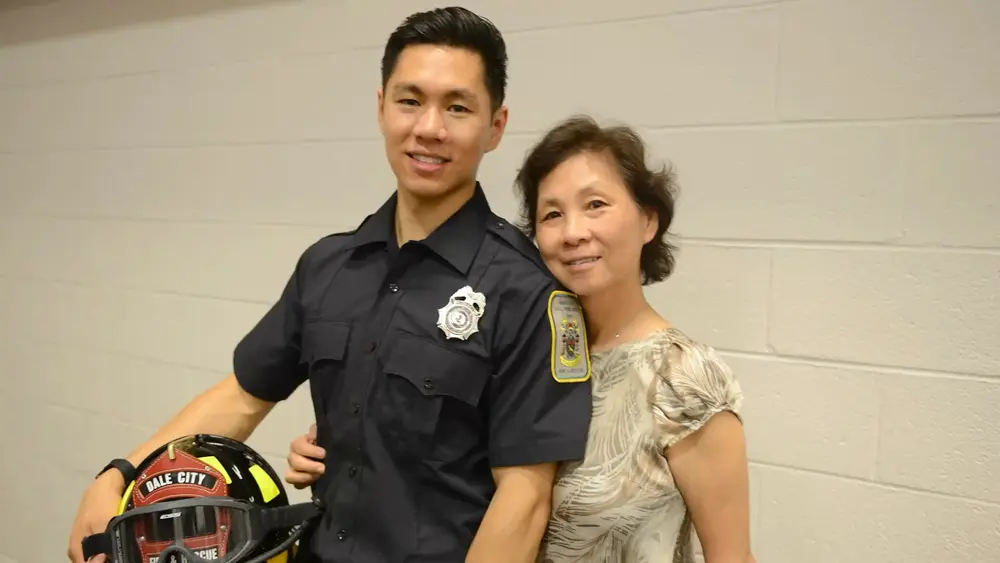
Pison began in 2016 after Dexter’s mother was diagnosed with ALS. He quit his job in finance and teamed up with David Cipoletta, an underwater robotics engineer who had been building eye-tracking systems for ALS patients at the University of Rhode Island, to develop a technology that could read the nervous system passively from the wrist, first to help patients like Dexter’s mom, then to help anyone measure and protect their cognitive performance.
The company is named after his mother’s cat, the one who stayed by her side and brought her comfort through her illness.
Founded with grants from MIT, the National Science Foundation, and the ALS Association, with later R&D from Samsung and SOCOM. Today the same technology is used by U.S. Special Forces, NHL champions, MLB top draft picks, and licensed into consumer wearables like Xiaomi Watch 5.
Press & Sample Requests
Headline statistics referenced: NHL player reaction-time improvement (24.61 ms, Pison internal/partner data); SOCOM Phase III SBIR (GlobeNewswire, Nov 2023); Temple University MDA/ALS Center of Hope clinical trial (Business Wire / AP, Apr 2023); blood-alcohol reaction-time pilot study (bioRxiv preprint, Apr 2025); Sleep model validated against the Sleep Heart Health Study and Muse EEG, benchmarked vs. Oura and Whoop (Pison technical doc, on request).