-
·
Neuromechanical Models of Mild Traumatic Brain Injury Conditioned on Reaction Time: A Systematic Review and Meta-Analysis
This paper is a review conducted by Auburn University and Pison researchers of existing research on the use of of neuromechanical probabilistic models as tools for assessing mild traumatic brain injury. The emphasis was on reaction time’s role in predictive diagnostics. Results showed that such metrics may enhance the sensitivity and utility of assessment and…
-
·
Three Critical Scores for Improving Cognitive Performance
The universally accepted method to measure and improve cognitive performance, whether you are an athlete or business person, is reaction time testing. In this white paper, we examine the importance of monitoring reaction time as well as the types of testing and their benefits.
-
·
Using Reaction Time Measurements to Avoid Long-term Effects of Brain Injuries
For athletes at any level—youth, high school, college and professional—brain trauma is a major concern. Despite increased awareness of safety measures and concussion protocol, many concussions and head injuries still go undiagnosed. In this white paper, we explain how an athlete’s reaction time is affected by brain trauma. We also explore how integrating a simple…
-
·
The Potential Role for Cognitive Training in Sport: More Research Needed
Sports performance at the highest level requires a wealth of cognitive functions such as attention, decision making, and working memory to be functioning at optimal levels in stressful and demanding environments. In this article, we outline the potential use of cognitive training (CT) in athlete populations with a view to supporting athletic performance.
-
·
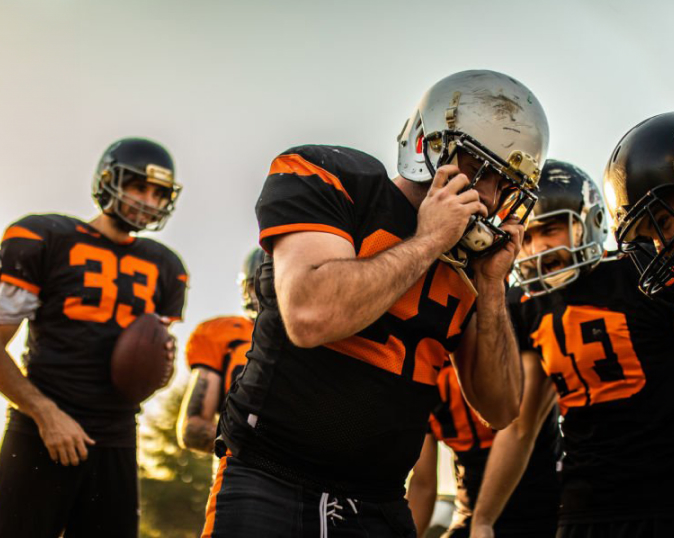
“Playing Through It”: Delayed Reporting and Removal From Athletic Activity After Concussion Predicts Prolonged Recovery
This study found that athletes at National Collegiate Athletic Association Division I universities who suffered concussions but did not immediately report symptoms and continued to participate in athletic activity are at risk for longer recoveries.
-
·
The Prevalence of Undiagnosed Concussions in Athletes – PMC
This study showed that 30.5% of the 486 patients included in the final analysis, reported a previously undiagnosed concussion.
-
·
Effect of concussion on clinically measured reaction time in nine NCAA Division I collegiate athletes: a preliminary study
This study showed that the reaction time of 9 collegiate athletes was prolonged after they suffered acute concussion.
-
·
Intensive baseball practice improves the Go/Nogo reaction time, but not the simple reaction time – ScienceDirect
A comparison of the reaction time and Go/Nogo reaction times of skilled baseball players vs. tennis players, and nonathletes.