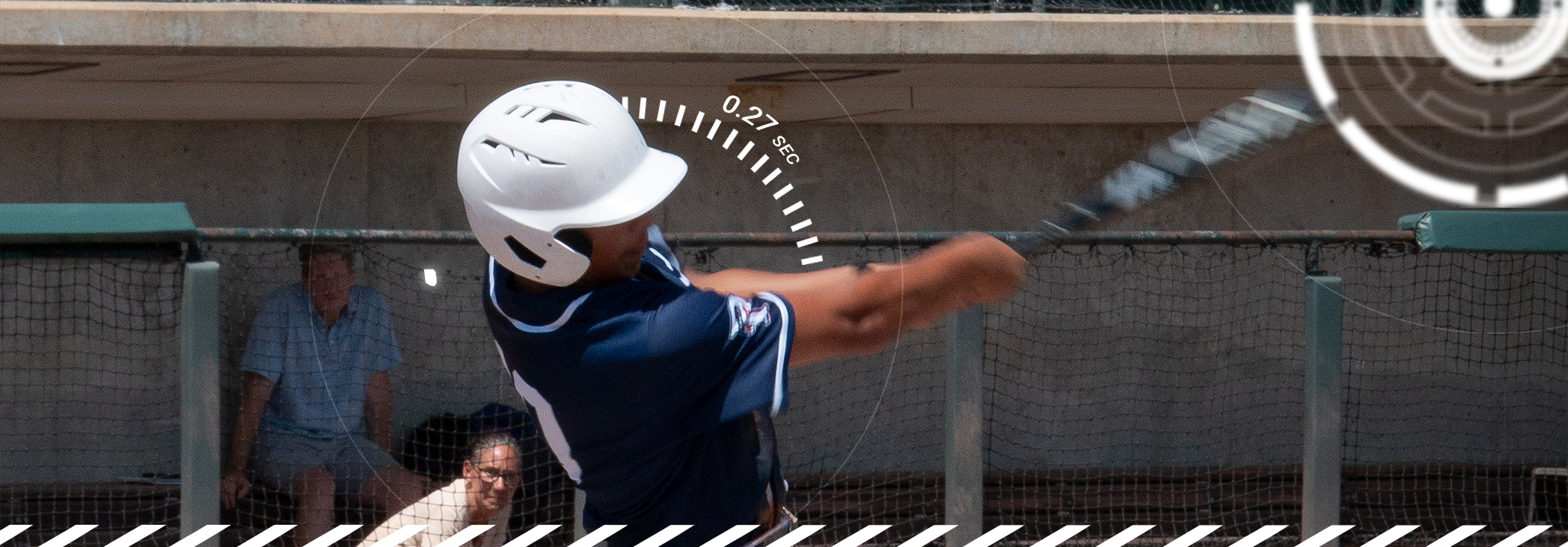
Baseball has earned a reputation for its long duration and frequent downtime, yet it remains a sport that demands some of the fastest reaction times from its athletes. Following the 2022 MLB season, new rules aimed at speeding up the game reduced the average game time to 2 hours and 38 minutes—the shortest since 1984. However, the “action time,” or the time the ball is in play, averages just 18 minutes per game. It is within these fleeting moments that players’ reaction times are tested, requiring quick and precise decisions to succeed.
Pison’s Innovative Approach to Measuring Reaction Time
Understanding Reaction Time Through the Pison Readiness Test
Pison’s Simple Reaction Test (SRT), also known as the Readiness Test, focuses solely on reaction time from a neurological and physiological perspective. This 20-second test helps athletes identify their cognitive upper limit by measuring reaction time repeatedly to establish consistent scores. This baseline provides valuable insight into an athlete’s inherent capabilities.
Measuring Decision-Making with the Go/No-Go Test
Pison’s Go/No-Go Test (GNG), or Agility Test, evaluates a player’s ability to make quick and accurate decisions, correlating directly to in-game performance. By combining the quickness element of the SRT with decision-making ability, this test mirrors the split-second choices players make during a game.
Reaction Time and Decision Time in Baseball Performance
Decision Time in Game Scenarios
Every action in baseball—from batting to fielding—relies on a combination of reaction and decision time. While reaction time is innate, decision time can improve through baseball-specific training. Monitoring these metrics provides coaches and scouts with valuable data for projecting a player’s developmental potential.
Former MLB player Marc Deschenes, founder and coach at USA Prime New England, emphasizes the importance of reaction time:
“Reaction time is big at the college and pro level… everybody is always chasing how to get better reaction time for their players, all the way down to the youth level.”
Reaction Time at the Plate: A Hitter’s Advantage
Breaking Down the Numbers
Hitters face immense cognitive demands at the plate. Consider the challenge of hitting a 100-mph fastball:
- Time for the ball to reach home plate: 375 milliseconds.